Heavy Records for Long Nights: A Winter Guide to Opeth and Orthodox
The nights are drawing in. By late November it is dark before dinner, and the records that suit the season change with it. Murder ballads, cold blue forests, a lit cabin in the snow: that mood is home ground here. But dark music comes in many shapes, and two heavy bands on opposite sides of the Atlantic make a strong pairing for the long nights ahead.
One is Opeth, a progressive metal band from Stockholm with three decades of ornate, atmospheric albums behind it. The other is Orthodox, a metallic hardcore band from Nashville that hits hard and bounces. This guide covers where to start with each, what makes their records worth your winter, and the warm pieces that go with them.
Who are Opeth, and why do they suit the dark months?
Opeth formed in Stockholm in April 1990. The name comes from Wilbur Smith's novel The Sunbird, where Opet is a fictional city, which already tells you something about the band's taste for the mythic. Mikael Åkerfeldt took over vocals in 1992 and has been the main songwriter ever since.
The music is hard to file under one word. It is progressive metal and death metal, but it also draws on folk, blues, classical and jazz. Songs move from heavy passages to quiet acoustic stretches and back again, which is exactly why they work on a cold evening: they take their time, and they reward listening all the way through.
A few moments in the story stand out:
- Blackwater Park (2001). The fifth studio album, and the one that took the band on its first world tour.
- Deliverance and Damnation. A heavy record and a soft one, recorded together in seven weeks of studio time. Damnation went on to win the 2003 Swedish Grammy for Best Hard Rock Performance.
- Watershed (2008). It reached No. 23 on the US Billboard 200 and topped the Finnish chart.
- Heritage (2011). A turn away from death growls towards a progressive rock sound.
- The Last Will and Testament (2024). The fourteenth studio album, and the record where the growls came back after 16 years. It won a Grammis for Best Hard Rock/Metal.
If you are new to the band, Blackwater Park is a classic way in. If you want the full arc in one go, The Last Will and Testament shows where all of it has led.
Which Opeth piece fits a winter wardrobe?
Opeth's artwork leans gothic and ornate: peacocks, crowned skulls, candles, robed figures, a serpent-branched tree. For the colder months, the hoodie built around the latest album is the obvious pick. The Opeth Last Will and Testament youth hoodie carries the band's wordmark over a sepia group portrait, with the album title and five portraits on the back.
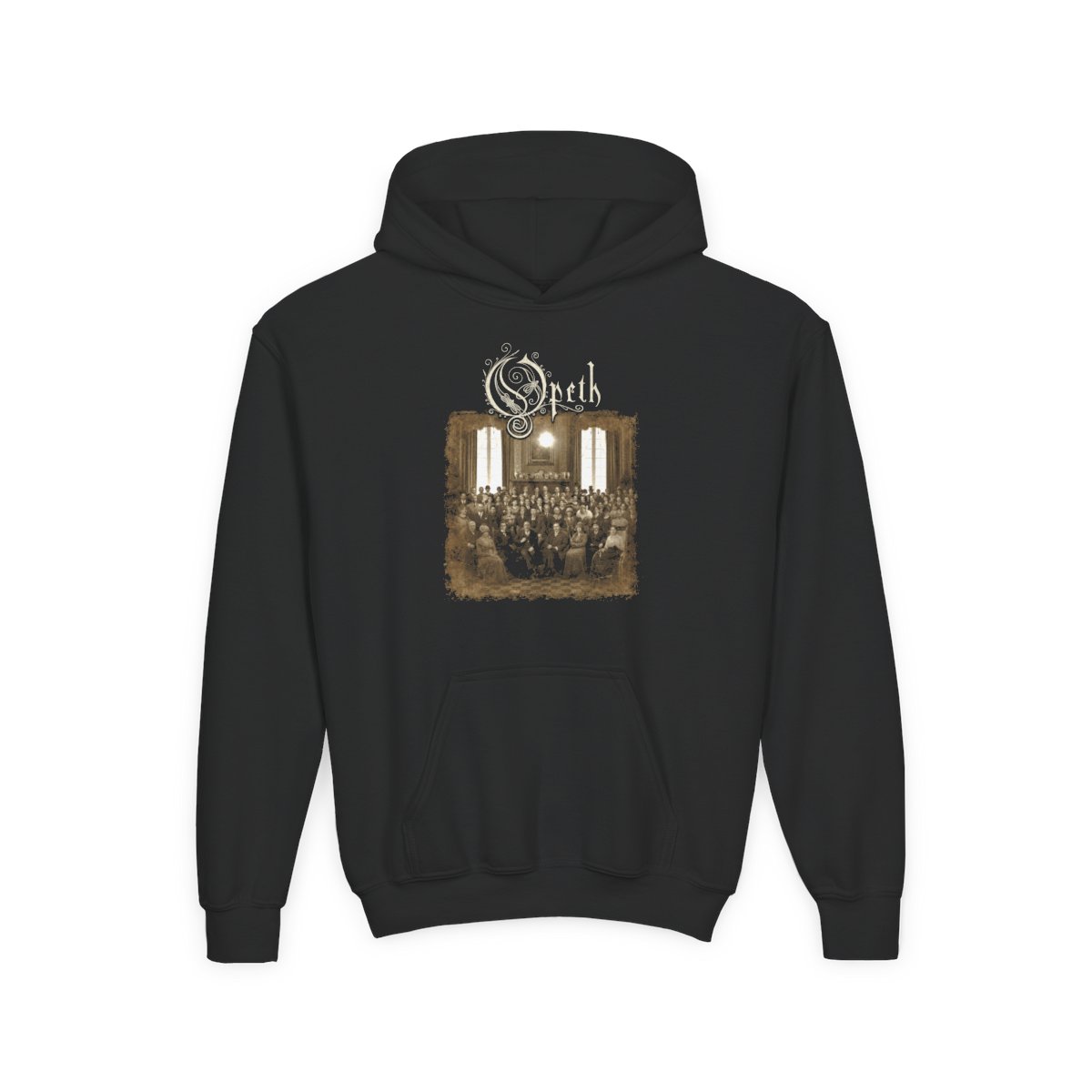
It is a youth size, so it makes a good gift for a younger listener who has just found the band, or for anyone in the house who borrows your records. Sepia tones and a dark garment are easy to wear with jeans and boots on a grey day.
Who are Orthodox, and where should you start?
Orthodox formed in Nashville, Tennessee, in 2011. They play metalcore and metallic hardcore with a heavy groove and a nu metal bounce, and on Bandcamp they describe themselves simply as "Orthodox Straight Edge, Nashville, Tennessee". Adam Easterling has fronted the band since the start.
Where Opeth stretch out, Orthodox go for the chest. The records are short, dense and built for a room full of people moving. That makes them a good counterweight on a long night: something to wake you up when the quiet albums have done their work.
The studio albums so far:
- End of My Wit (2013)
- Sounds of Loss (2017)
- Let It Take Its Course (2020)
- Learning to Dissolve (2022, Century Media)
- A Door Left Open (2025, Century Media)
Learning to Dissolve is the natural starting point. Easterling has said it is about growing up and finding that the things you wanted, or the people you loved when you were young, no longer line up with your moral compass. The album release show was filmed on August 28, 2022 at The End in Nashville.
A Door Left Open followed in June 2025, produced by Randy LeBoeuf, with guest spots from Brann Dailor of Mastodon, Matt McDougal of Boundaries and Andrew Neufeld of Comeback Kid.
Which Orthodox piece goes with it?
Orthodox artwork is starker than Opeth's: big lettering, grainy band photos, red outlines, a skull with a bone for a scale beam. The design that best carries the mood of Learning to Dissolve is the melting torso, and on a cold day the Orthodox Learning to Dissolve torso youth hoodie puts that orange, yellow and grey figure under the band's name, with the album title written below.
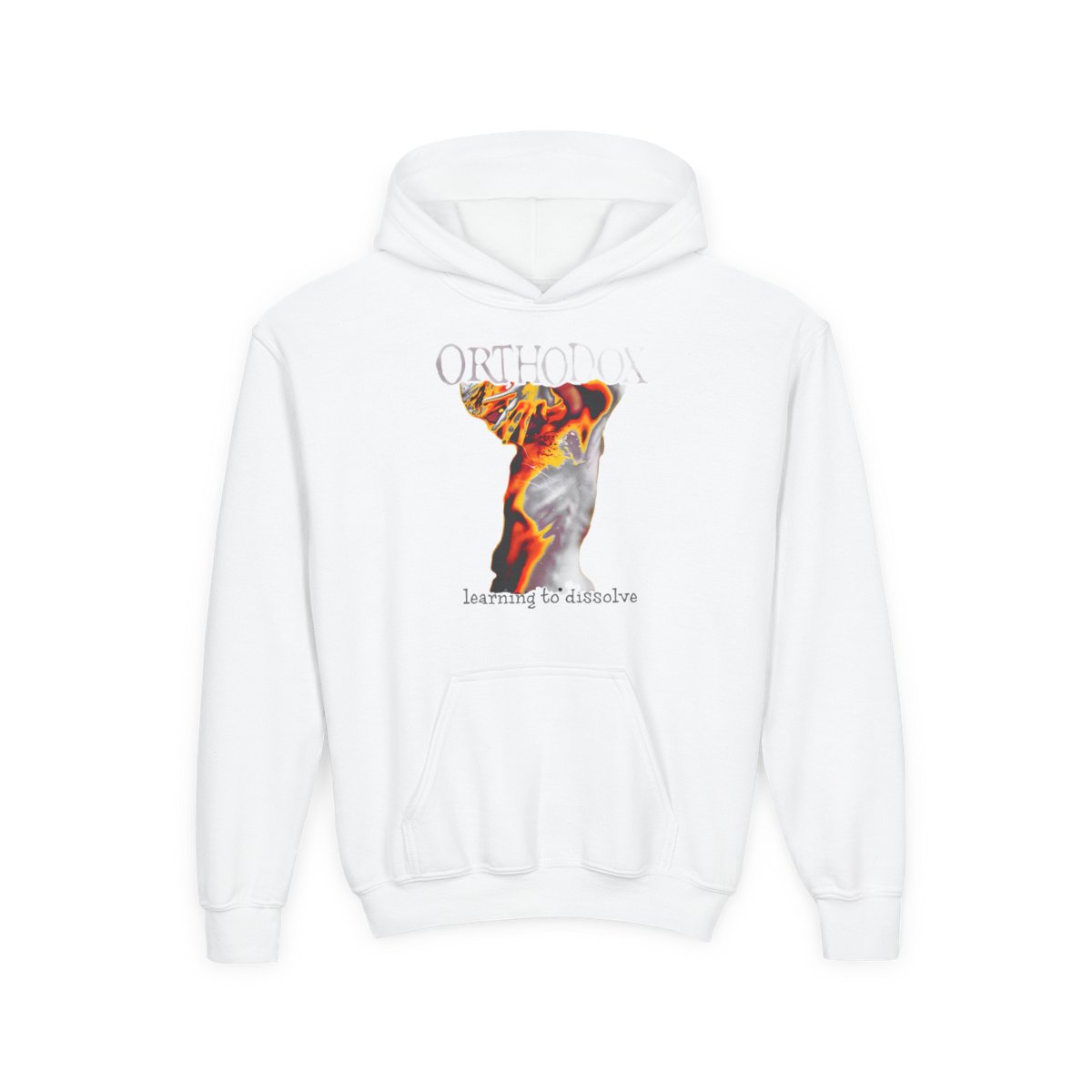
The warm colours of the artwork stand out against a dark hoodie, so it is an easy piece to build an outfit around: plain black jeans, a beanie, and you are set for a winter show or a walk home in the cold.
How do these two fit alongside our own winter pieces?
They sit at different ends of heavy music, and that is the point of pairing them. Opeth are the slow-burning, candlelit side of the dark: long songs, quiet turns, ornate artwork. Orthodox are the close, loud, packed-room side. Put a record from each on the same evening and you get both moods in one night.
If your taste runs to our own darker records, the same season suits the Murder Ballads Winter Night hoodie, with its moonlit painting of a lit cabin in a snowy forest. A shelf, or a wardrobe, with all three moods on it covers every kind of long winter evening.
Whichever way you lean, start with one album, give it a full listen with the lights low, and choose the piece whose artwork you keep coming back to. You will find the Winter Night hoodie and the rest of our designs in our shop.